
Freshly returned from our two-week Christmas sabbatical, our first job in 2025 was at St John’s Grange.
Our task was to expose Lock 23, which is right next to the Southern Bypass. A full topographical survey was subsequently undertaken and various measurements were taken for the detailed design stage, as a precursor to applying for planning consent for this section.

We located the south wall and, of course, the north wall was about seven feet away. We have storm and foul sewers passing through this area, so in mid-February we just needed to verify the installation.
We know that drainage groundworks contractors sometimes put concrete around the chamber sections to make sure that they don’t move when the area is backfilled by the civils contractor. This is so that the groundworks contractor can guarantee water tightness of their chamber. Thankfully, there was no perimeter concrete.
However, the area is still quite restricted by the cast square chamber capping, and the chamber rings reduce the width even further.
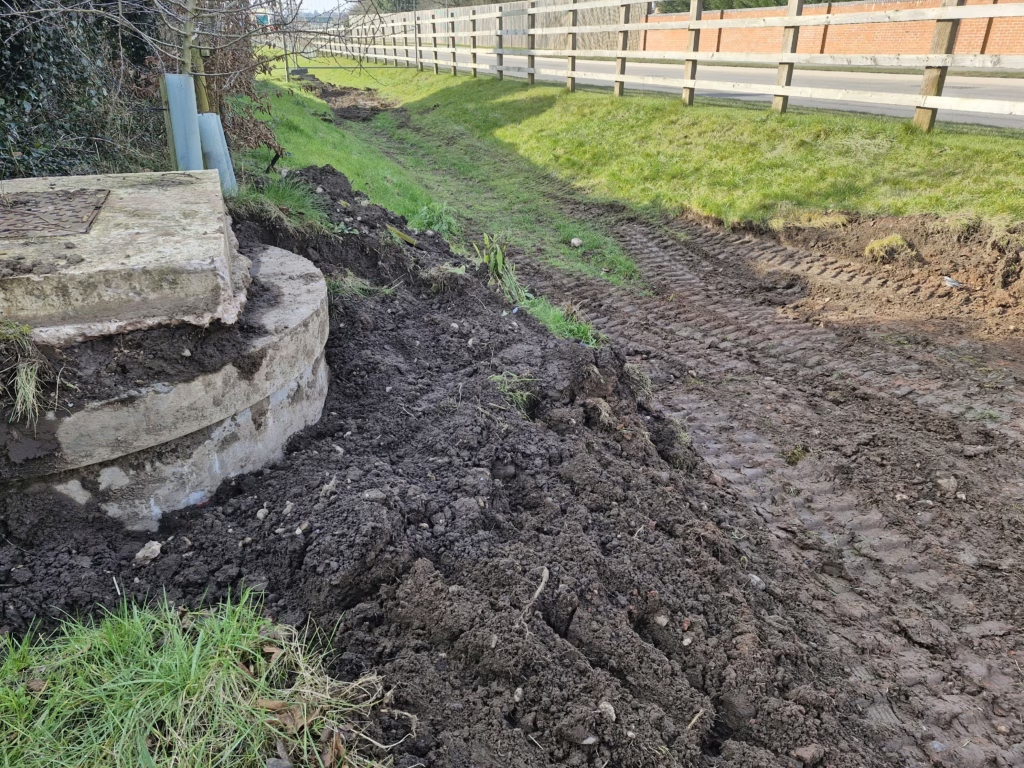
These inspection chambers are already installed to the finished towpath height, so you can hopefully envisage what the completed area will look like. There is room for a two-metre-wide towpath on this side.
By late February our attention had moved to Gallows Wharf.
When the canal was decommissioned, the various water inputs were routed into a new 27” concrete (big) pipe in the canal channel. The pipe runs from the St John’s area and discharges into Darnford Brook. On the curved canal section from London Road to the oak tree on Tamworth Road, this pipe passes through the bank side of the canal no less than four times.
We have a plan of how the completed canal will look on this section. It also shows the sections of decommissioned pipe, which will remain in the bank, but the challenge for us is how to construct it whilst keeping our feet dry.
The plan is to extend the wharf wall to the first of these pipe clashes and then to install sheet piling from there to where the pipe next passes the bank. This will allow us to progress for a couple of months without disturbing the pipe. We started by digging around the pipe, underpinning it with concrete and casting a rear wall foundation.
By late March, Dave had also started the circumferential brickwork around the pipe – thus forming the start of the front wall.

Mike Babb
Workparty volunteer
This blog first appeared in Cut Both Ways, our members’ magazine.
For more recent photos, follow our Facebook page.

