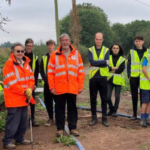
It’s been a strange couple of months weatherwise. Apparently, it has been the warmest and wettest February on record, but we have still cancelled a couple of work days due to the inclement weather. The last couple of months have just been about finishing off jobs.
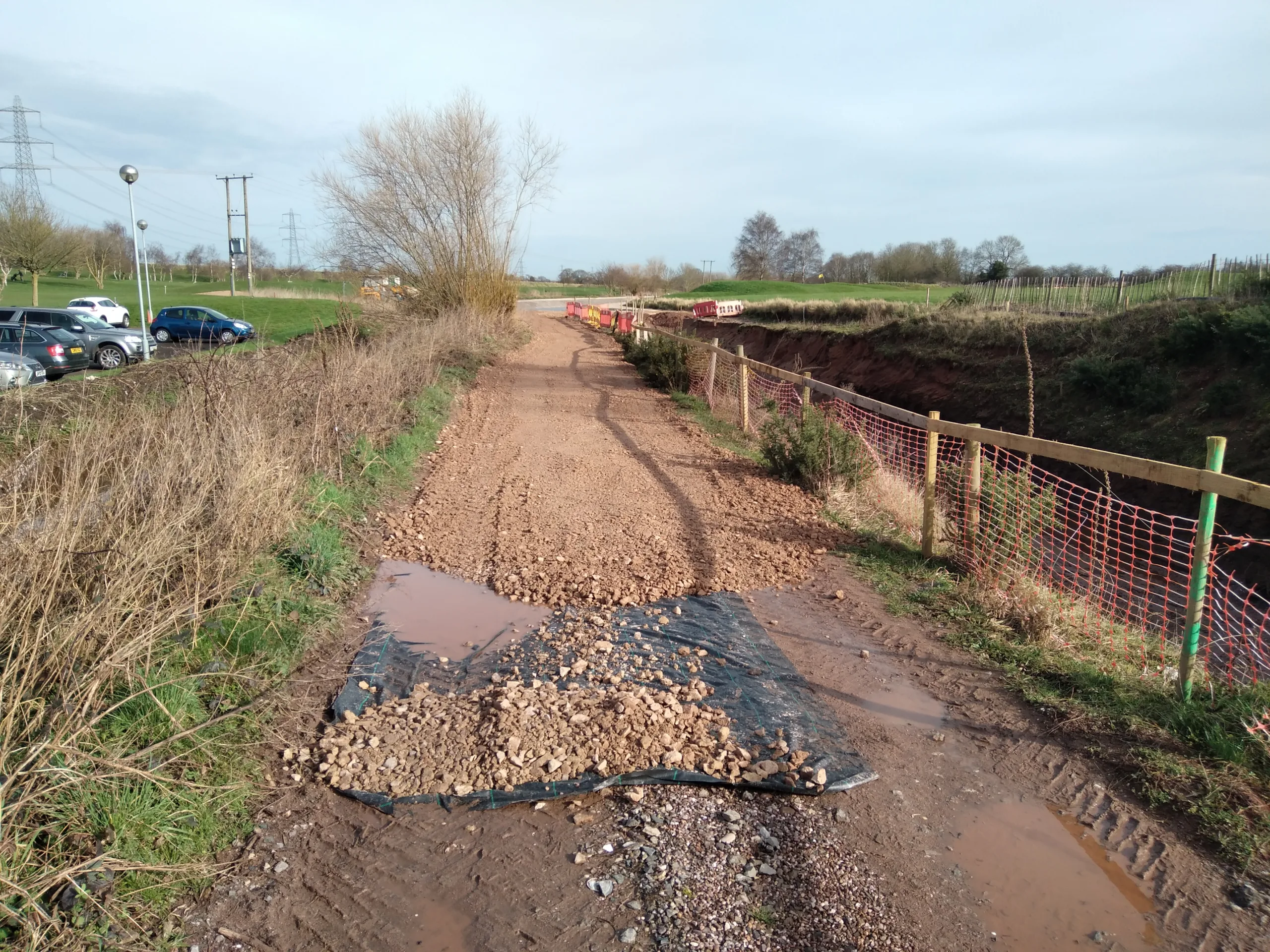
In order that the site could be fully opened up to the public, we joined up the front towpath and rear walkway to create a circular or figure-of-eight type walkway. So, the usual weed-suppressing membrane was laid, with about 100mm of gravel on top. We tend to order gravel from whichever company is the cheapest and this is why we now have gravel across the site which is various shades of grey and yellow (slate and limestone based).
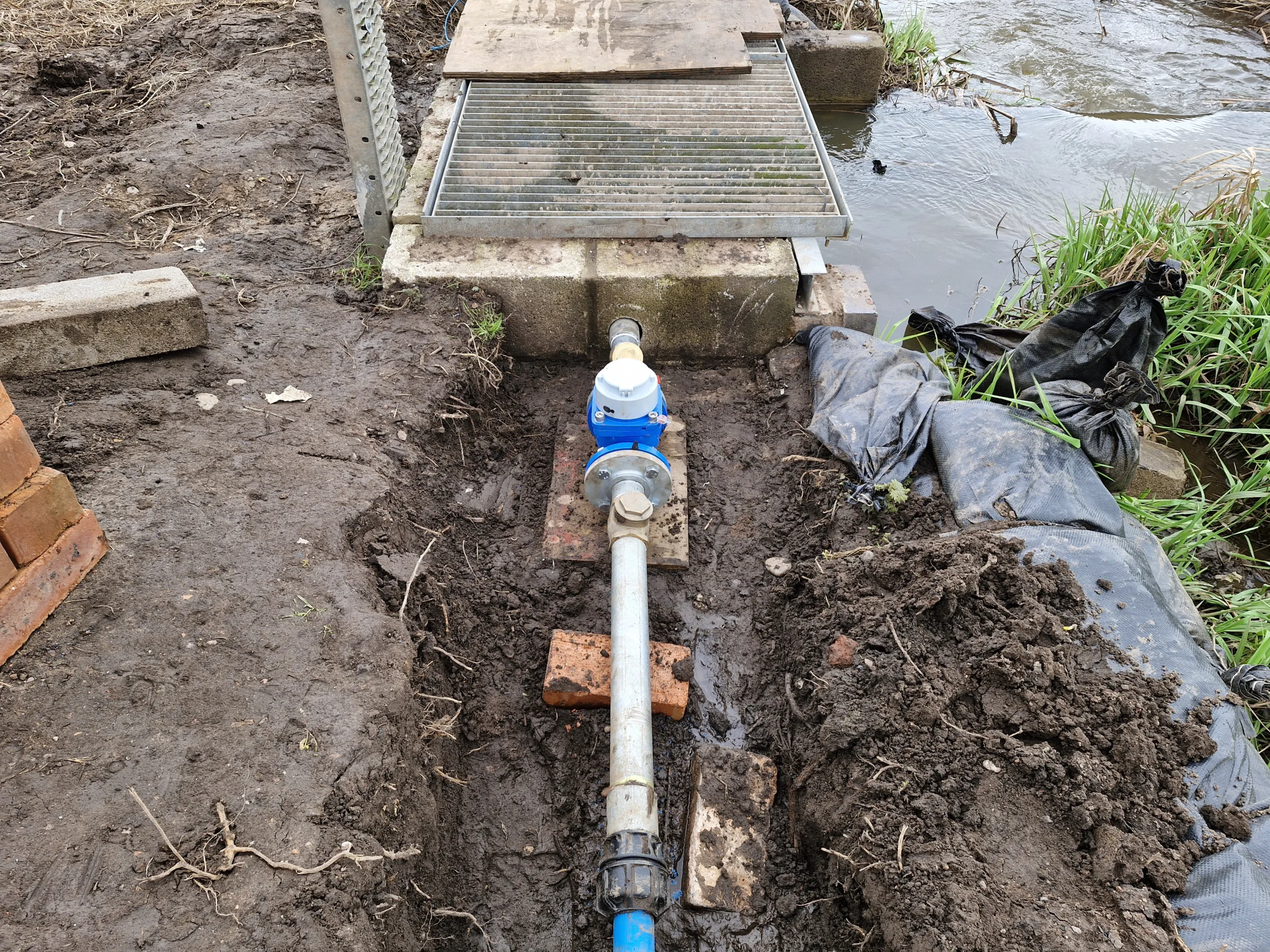
One of the final jobs has been to install an electric pump, together with a water meter, within the existing weir chamber next to the lift bridge. The water meter is needed to demonstrate compliance with the abstraction licence. This work also involved fitting a 6” penstock onto the existing pipe in the sump chamber (which feeds water down to Lock 30). The idea is to be able to either pump water into our new section of canal or let it drain via gravity into the bottom lock chamber.
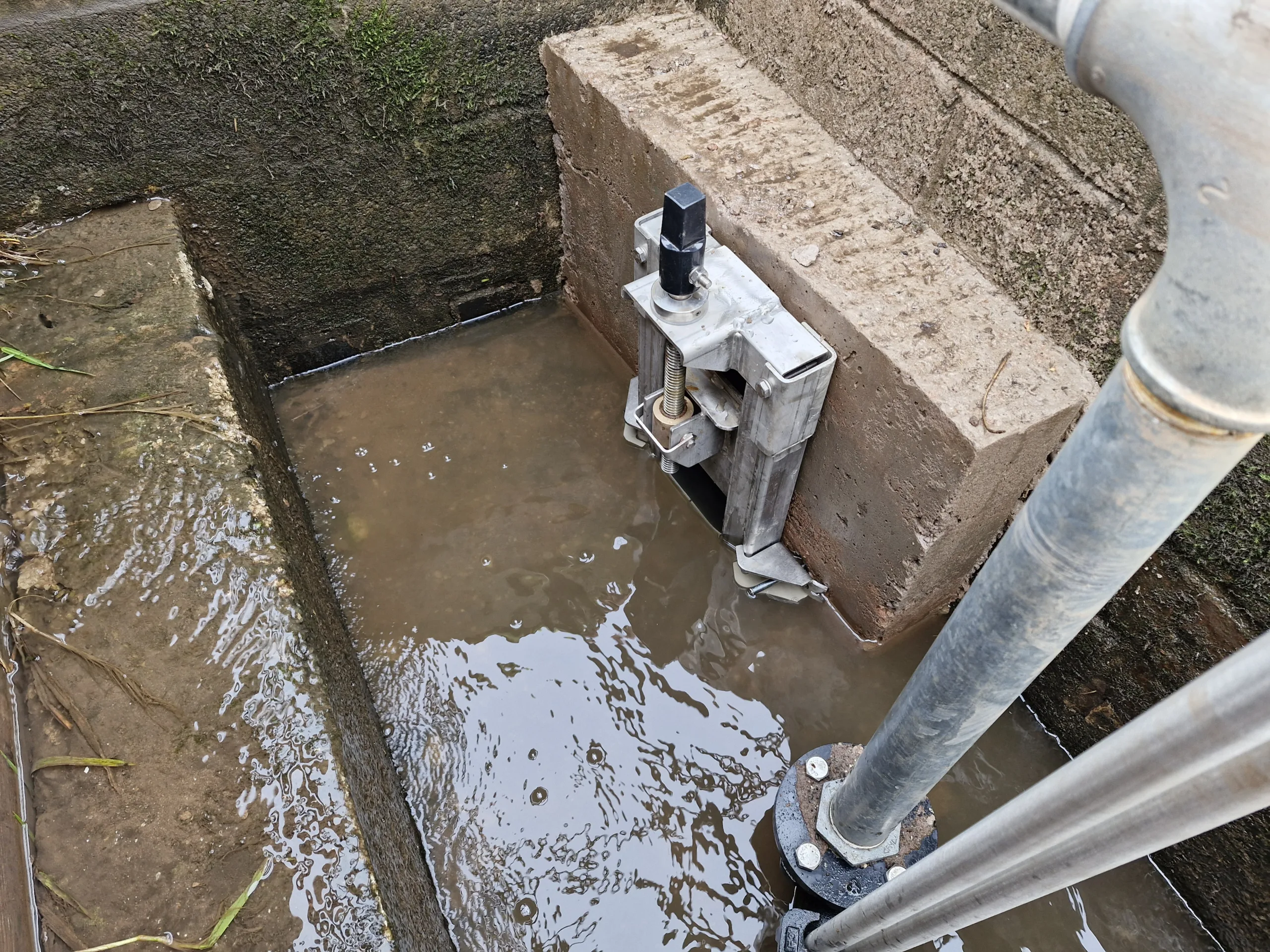
The main issue with the penstock was that when we drained the sump chamber, we found an 11” metal pipe entering at an angle, rather than the 6” earthenware or clay pipe that was assumed to be there.
So, how do you fit a 6” penstock onto an 11” pipe? Several options were discussed, which mainly revolved around partitioning the sump with a breeze block wall and then mounting the penstock onto the partition wall. We had difficulty in stopping the water flow over the weir and into our chamber and so thought we would really struggle trying to lay blocks in several inches of moving water. For several weeks no one has wanted to tackle this job. We put it in the ‘too-hard-to-do’ pile.
But then a brainwave from one of our volunteers – we cut a piece of shuttering plywood to accept the penstock, mounted the ply directly across the front of the pipe and then backfilled the space between pipe and wall with concrete. Luckily the framework on the penstock blocks off the remainder of the pipe.
Meanwhile, Dave was building a rustic wall and gate to give access to the pump. All of this was made from recycled materials. The timber for the gate was recovered from skips and the slabs were donated.
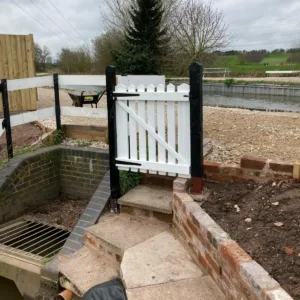
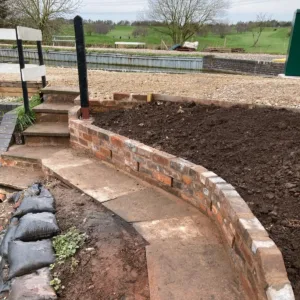
The last jobs were the to fit signage and bases for picnic tables, and also clear out around 50m of brook to improve the discharge water flow.

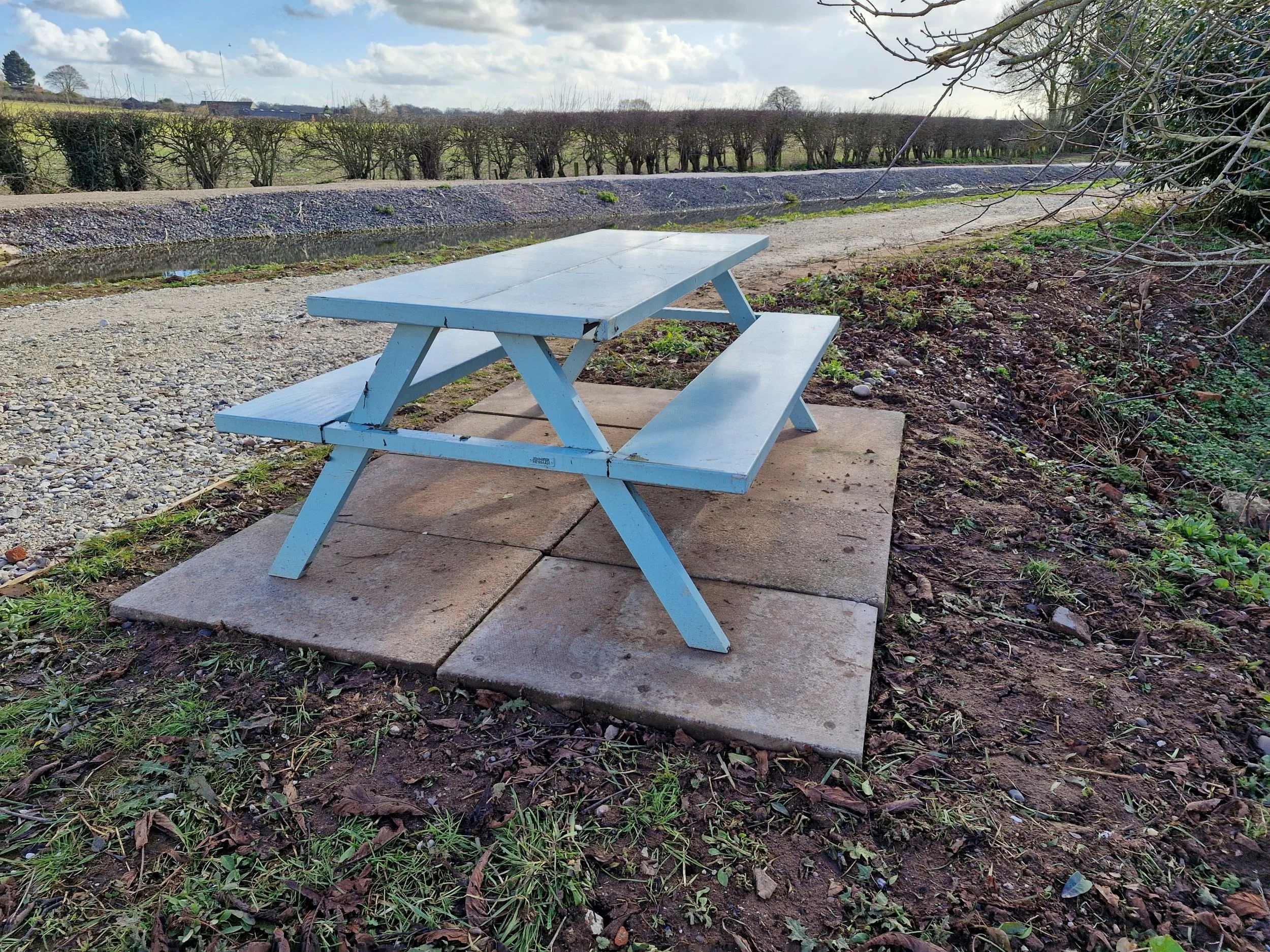
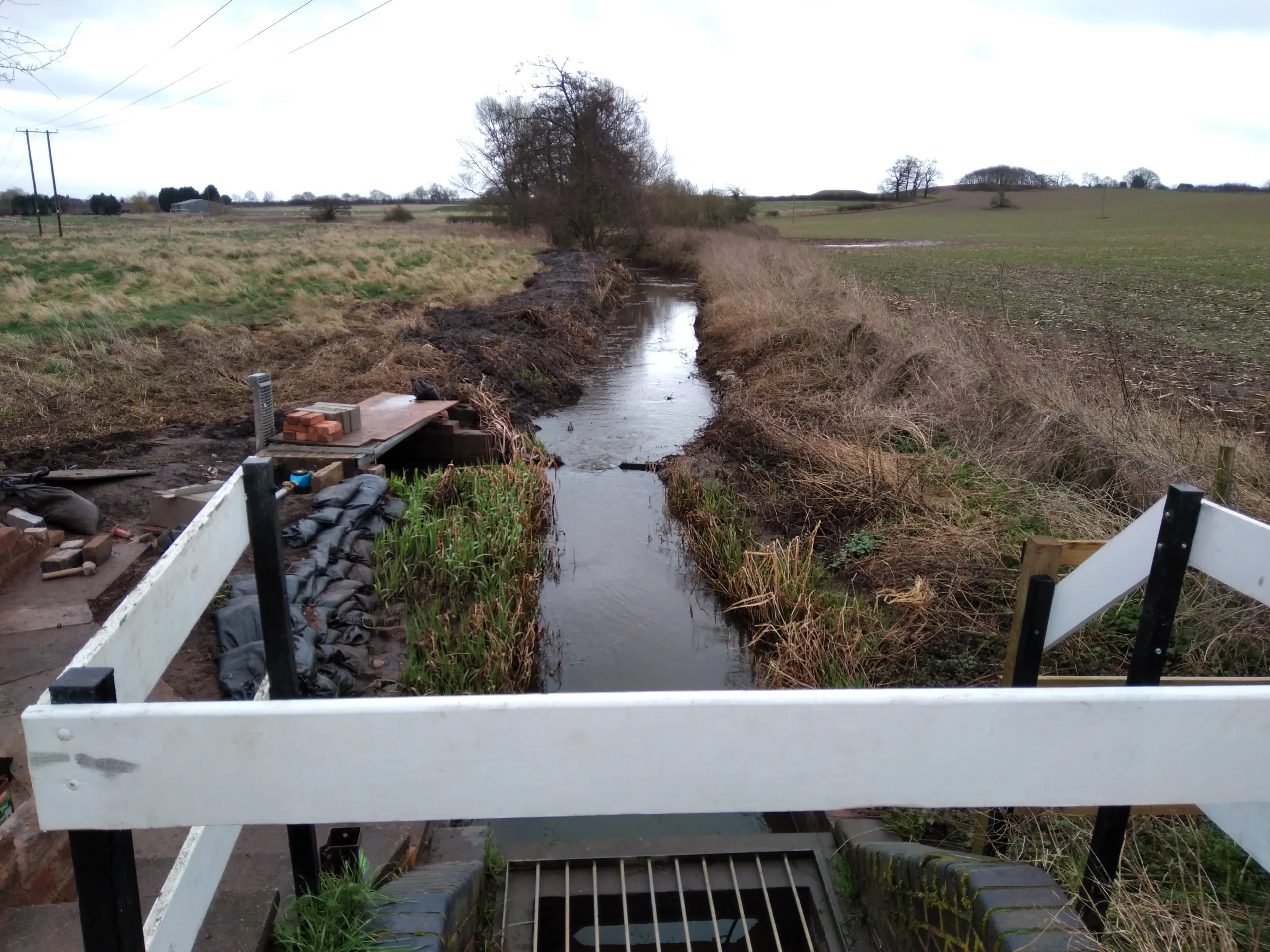
For the moment, our work at Darnford Moors is done and we hope that people will enjoy the new environment.
There will be an announcement soon about when it will be open to the public.
Written by Mike Babb, LHCRT Workparty Volunteer